Archive for the ‘Contests’ Category

Night 8 Writing Tip

The last post comes from Olugbemisola Rhuday-Perkovich, author of EIGHTH GRADE SUPERZERO–debuting January 2010 from Arthur A. Levine/Scholastic. To find out more about Olugbemisola and her books, visit her at http://www.olugbemisola.com.

All of a Peace

I’ve loved to ‘make things’ for as long as I can remember. At the start of every holiday season my mind turns (a little too late) to all of the gifts that I want to make for people, for myself, for no particular reason; and then my longing to work on those often competes with a craving for more time to write, to work…and then I remember once again that it’s all of a piece for me, this writing and crafting thing.

Knitting and stitchery help me to revise, to think through stories or writing issues.  Like many writers, I spend a lot of time ‘thinkwriting’, and often a day comes when I sit down with my notebook and a fine point felt-tipped pen, and…a blank page stares back at me. And stares. And stares. I usually keep a few unfinished needlework projects around for just those moments, and when I pick up the needles and start to knit and purl, or loop the needle and floss around in a simple blanket stitch, the story welcomes me; I work my way in.  There is something about working the texture of the yarn, fabric, embroidery floss, or sometimes clay, that prompts me to simultaneously focus and let my mind wander into a story or moment with a character in a way that is both productive and supremely enjoyable.

I’ll admit that part of my inclination to making a writing/crafting connection stems from a nagging sense of guilt about looking busy, about ‘doing more’…letting those people who tell me about their ‘real jobs’ that keep them from ’sitting around writing books’ get to me. In a way, that has prompted me to think about my crafts as intricately entwined with my work as a writer.  But that’s also been a blessing in disguise, because I truly believe that the work with my hands stimulates the creative work of my brain.  Collage, another wonderful brainstorming and revision tool, has literally helped me enrich characters and add depth in ways that simple listmaking or character sketches have not. Choosing a certain shade of blue, a scrap of text from a vintage book, a photograph of an overturned vase can immediately evoke a story or character ‘memory’ — “Ruthie would have done this, and then this…” — that leads me down an exciting writerly path. Sometimes it’s a literal “Aha!” moment, when a scene or bit of dialogue pops out, clear and gleaming as crystal, in the process of making; other times it’s a dim sensibility, a mood, an idea about theme that becomes lucid as I roll tiny french knots, maneuver a cable needle, or just wind a ball of alpaca round my hands.

And sometimes I make a stuffed toy or a cat hat because I’m just procrastinating and don’t want to pick up a pen (I still write longhand first drafts, notes, etc.) just yet.

“What does your character want?” is one of those questions that is often asked of an author in the process of writing and revising. I think they all want to be treated with care and respect, and taking some time to work with my hands in this way reminds me to do just that. And sometimes, when I lay down the pages and turn on the sewing machine for just five minutes, I am reminded that it’s not that I don’t have enough time — I do. I don’t always respect the time that I have, I let the tyranny of the urgent overpower the important. Then I let myself enjoy this work that means so much to me, go into the story and tend to my characters with patience and a renewed sense of purpose.  I can even tell myself that the almost unforgivable amount of unfinished objects and WIPs laying about are helpful, really, plentiful reminders to respect and enjoy the process, not just the finished product. I’m not a particularly skilled crafter, and definitely a dilletante  (you should see my craft book collection, it’s embarrassingly large and all over the place); but I love to make things.
It awakens my mind, and quiets my soul. It helps my work; it helps me love my work.  The ‘craft’ of writing works for me.

My craft blog:

http://www.olugbemisola.com/blog


A Few Creative/Craftish Books that Inspire My Work:

52 Projects by Jeffrey Yamaguchi
The Creative Habit by Twyla Tharp
Knitters Almanac by Elizabeth Zimmermann,
Making Puppets Come Alive, Larry Engler & Carol Fijian
Creative Knitting, by Mary Walker Phillips,
Handmade Toys and Games, Dollmaking: A Creative Approach, and Creative Body Coverings, by Jean Ray Laury
The Joy of Knitting by Lisa R.Myers
Knitting for Anarchists, by Anna Zilboorg
Making Things, Books 1 & 2, by Ann Wiseman
Kurikuri/Tezukuri Series (Japanese)

A few crafting projects:


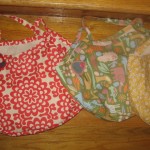
Betsy Ross Bags

Betsy Ross Bags


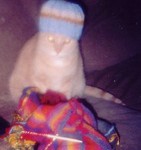
Lil Shane in kitty hat

Lil Shane in kitty hat


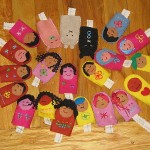
Finger puppets

Finger puppets


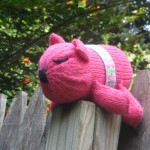
Wombat Observing Surroundings

Wombat observing surroundings


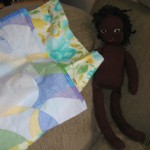
Dolly

Dolly


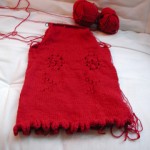
Holiday Dress

Holiday dress


Night 7 Writing Tip

Today’s post is from Stephanie Burgis, author of the Unladylike Adventures of Kat Stephenson trilogy, which starts with Book One: A Most Improper Magick, due to come out April 20, 2010 from Atheneum Books. To find out more about Stephanie and her books, please visit http://www.stephanieburgis.com.


Follow Your Fun to Success


The most important writing tip I know is this: *follow your fun*!


It’s important to write as well as you possibly can, but it’s even more important to write your true heart’s passion. That’s a lesson it took me a long, long time to learn.


Back in 2001, I attended the Clarion West Science Fiction & Fantasy Writing Workshop. It’s an intense 6-week, residential workshop with competitive entry, taught by professional science fiction and fantasy authors. I learned more about writing in those six weeks than I ever had in my entire life up until then, and I got to see my own writing improve in huge leaps, faster than I ever could have imagined. Without having gone to Clarion West, I wouldn’t be a professional writer now, and I’m incredibly grateful to have had that opportunity.


And yet…


There was just one thing that wasn’t so good for me about the workshop. Before I stepped on the plane to Seattle, I was midway through the first draft of a lighthearted, silly, funny middlegrade SF novel that made me laugh and made me happy. Within a week of arriving at the workshop, I’d given up that novel. By the end of the workshop, I felt genuinely *embarrassed* to have ever let myself spend time writing something so silly and un-“serious”…because the message I somehow picked up at the workshop (and I’m not blaming any of my instructors or classmates for this) was that writing had to be “serious” to be worthwhile – and who wants to write something that’s not worthwhile?


Well, I’m a reasonably intelligent person. Once I have a goal, I try to follow it. So for the next five years, I wrote Serious Work™ with all my might. I’m really proud of a lot of the stories I wrote in those years, and I worked very hard on them. I think everyone has darkness inside of them as well as light, and I explored that darkness as well as I could.


Every so often, though, I’d slip and let myself write a funny, lighthearted short story just for my own entertainment, and in what should have been a sign to me, the first one I wrote turned out to be my first professional short story sale – but I ignored that sign with all my might because it didn’t match the “truth” I thought I understood about writing.


The thing is, what I wanted more than anything else in the world was to publish novels – so when it came to writing novels, I never let myself slip. I wrote Serious with all my might, working very hard to try to write the kind of novels I thought other people would want to read…until one day the idea for a completely different kind of novel slipped into my head. It was wacky, lighthearted, and the first lines made me laugh…so I knew I couldn’t let myself do it.


It was the opposite of “serious”. It was the opposite of where I thought I needed to go for my career. It was too quirky, too focused on my own individual loves. It was what *I* wanted to read, not what *other* people would want to read. I knew I couldn’t let myself write it, no matter how tempting it felt…


Well, I’ll cut a long story short. I finally gave in (almost a year later!) and wrote that novel purely for myself because I couldn’t get it out of my head…and guess what? Last year that book sold as the first in a trilogy. It turns out that what makes me laugh makes some other people laugh, too – and the books that were most fun for me to write are also the books that are most fun for other people to read.


I’m not saying that everyone ought to write lighthearted, funny books. But the lesson I’ve learned not, just from my own experience but also from the careers of a bunch of my writer-friends, is that your most successful books will always be the ones you write *for fun*, whether that means light-hearted Regency fantasy for kids (like mine) or hardcore, fact-based science fiction/gruesome thrillers/meditations on grief. Different people enjoy different things…


…But whatever you write, make sure you’re writing what *you* truly want to read, not what you think agents/editors/other “important people” will want to see. That’s not just the only way to make writing truly worthwhile – it’s also the best tip I know for success.

Night 6 Writing Tip

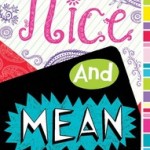
Nice and Mean cover

Jessica Leader is the author of Nice and Mean, about two girls, one nice, one mean, who face off in their middle-school video elective. Nice and Mean will be published by Simon and Schuster on June 8, 2010. To learn about Jessica, Nice and Mean, or the nifty polls she’s put on her website, go to www.jessicaleader.com.


The Writing Block Song

Chanukkah celebrates the overcoming of adversity in the face of great odds, and you know, that’s just what we do as writers. Some days, facing down a troop of Syrians doesn’t seem like much, compared to figuring out what the heck I’m going to do with that dropped plotline. Writing calls for hard work and miracles, too!

With that in mind, I give you a version of the most traditional Chanukkah song I know, with a twist: writer’s block.

The rhythm of the song is a little wonky (we Jews love our syncopated rhythms), so here’s a video of the song to help you with the tune. It’s an unusual choice for a video, I admit (a middle-school student signs while music plays in the background), but the ones I passed up featured strobe-light menorahs, off-tempo pre-schoolers, and a chorus of girls so unfortunately attired in matching black dresses, I couldn’t bear for anyone to watch them.

The Writer’s Block Song

By Jessica Leader


Writing block, oh writing block, it tries to destroy us.

How can we change it to merely annoy us?

Here’s my little lesson to lessen the rage:

Blocks are really boredom with what’s on the page.


(Chorus tune)

I ask myself questions

To see what is making me bored.

One for each night, they diminish my fight

And they sweeten what once was abhorred.

One for each night, yes, they shed welcome light

And result in a tale that’s adored.

(I hope!)


(Verse tune)

First: is my character’s goal in this scene clear?

Is there good reason that she wants it now, here?

Is her life so bad that we care where it hurts?

Drive her up a tree, then pelt her with dirt.


(Chorus tune)

And now, motivation,

I’ve conquered you—Ha, you are mine!

Now I’m revising—Tyra, I’m smizing—

This novel is closer to fine.

But while rereading, my joy is receding—

Cause somehow, my prose doesn’t shine.


(Verse tune)

Know why this is dull, Jess? You can’t see the setting.
(Dialogue’s my favorite; set’s my forgetting.)

So I go back in and sprinkle details

Best if they’re symbolic—a cure for what ails.


(Chorus tune)

I think this part’s good now.

It doesn’t suck nearly as hard.

Where is my chocolate?

Because I have rocked it—

I see my book multiply starred!

Bring on the gelt,

I will loosen my belt

For a big giant writing reward.


Night 5 Writing Tip

Lindsay Eland, author of SCONES AND SENSIBILITY, coming out on December 22 from Egmont USA (OMG! That’s 5 days people!), posts today! To find out more about Lindsey and her books visit her at www.lindsayeland.com


A Somewhat Revealing Post

There is a lot more to who we are as people than just what we say, right?

We are people who feel and think deeply yet so differently about everything from the Twilight craze to the African Aids epidemic.

We react to all our surroundings revealing to everyone around us how comfortable we are on stage or in a crowd at Disney World.

And we each have our own unique backstory that illuminates the very essence of who we are in this very moment.

So it has to be with the characters we create. Our stories must be saturated with character.

William Goldman said, “If your characters are saying only what they’re saying…you’re in trouble.”

How true.

Everything that you write must reveal that character you want us to follow and sympathize with, and cry over, and cheer for.

We must see him or her through every single setting.

Feel what they feel at every moment and turn—their reactions coloring every bit of prose and every description.

He or she must be revealed in every tidbit of backstory, every line of exposition, every detail from the cereal they eat at breakfast to the music they play on their ipod.

Everything must reveal character.

Because just as we are people worth watching and paying attention to and listening to, and cheering for, so our characters must be as well.

Night 4 Writing Tip

Today’s post comes from Kurtis Scaletta, author of Mudville, published in 2009 by Knopf Books for Young Readers. His second novel, Mamba Point, will be published in 2010, and his third novel, Wake, ME, will be published in 2011. Find out more about Kurtis and his books at http://www.kurtisscaletta.com.


The Long View


If I had to distill my advice for emerging writers to a single sentence, it would be: take the long view.


Take the long view of your career


In my 20s and early 30s I went running sometimes. I was never a runner, though. I know a lot of runners, and they just do the whole running thing on a different level. They run every day, no matter what the weather or their mood. They know all the science about running — the proper way to stretch and warm up, what their heart rate should be at any point in a run, when and what they should eat, and a bunch of other stuff I find boring.


I thought I might like to run a marathon, some day, but the plain truth of it is that I liked the idea of boasting about having run a marathon, but didn’t really want to become a runner, and that’s what you have to do first. You have to take a long view of yourself as a runner. It’s a lifestyle decision, and I wasn’t up to it. I know now I’ll never run a marathon. That’s fine. I’m not a bucket list guy with a bunch of stuff I want to do just to have done it. I have also realized at various times in my life that I am not a musician, an artist, a golfer, a poet, or a practitioner of yoga.


I am a writer, though. I have always had a long view of myself as a writer, and went through many years of writing classes and workshops, critique groups, reading books about writing and publishing, and writing every day, completing four unpublishable manuscripts before the first made its way into print. So when people ask me how I got a book published, I find myself explaining that I was a writer first. I didn’t just knock off a book over a long weekend and win the slush pile lottery. I’ve been doing this stuff since I was six years old.


And I still have a lot to learn. I may have sold a book or three, but I still read other books and realize I have a long way to go. It’s not about just straggling along the finish line once and saying, “There, I did it. I ran a marathon.” I want to keep doing this, and keep achieving a new personal best.


Take the long view of your role in the industry


Most agents and editors aren’t looking for a one-off. They’re looking for a LTR, as they say in the personal ads. I think it’s easy for new writers to jump at any opportunity to get a bit closer to publication, but since I’ve now known my agent for three years and my editor for two and a half years, I can really appreciate how important it is to have smart, thoughtful people who are also taking the long view of my career as a writer. It’s a serious commitment for everyone, and you all need to be ready for the long haul. Think of the relationship beginning with your query letter, not with an offer.


Take the long view of your current project


If you’re lucky, you might see your first novel in print three years after you start writing it. For me, it was five years. Book publishing is a slow business. We live in the age of NaNoWriMo and instant web publishing, and blogs that turn into book deals within months, but most books take a year or more to write and up to two years to publish after the manuscript is done. So even though it’s exciting to have books out on submission, knowing that any minute now the phone might ring with exciting (even life-changing news), there’s really no hurry. There’s always time for another round of revisions, or for a little research to tighten up some stuff you faked your way through on the first draft. I’m really glad I gave Mudville that second summer of revisions, that I stopped to research things that felt unimportant when I was storming through that first draft (like how to rebuild a baseball field) and that my agent then put me through another winter of edits before she started shopping the book around. Now that it’s out, it doesn’t feel like the waiting was that hard, and it was definitely worth it.


On a similar note, take a long view of your book. It might be in print for fifty years or more. A few months, even another year, will not make a difference. And don’t worry about what the current trends are, either. Did E.B. White worry about whether pig fiction was big in 1952? Was Dr. Seuss convinced that rhymed stories about meddlesome cats were all the rage with six year olds five years later? Write as if your book will be around for generations, outlasting the trends. Maybe it will, and maybe it won’t, but it’s more likely to if you take the long view.

Night 3 Writing Tip

change_of_heartToday’s post is from Shari Maurer, fab author of CHANGE OF HEART. Debuting Spring 2010 from WestSide Books, CHANGE OF HEART, tells the story of a 16-year-old soccer player who needs a heart transplant and learns about life, love and friendship in the process. To find out more, visit Shari’s website www.sharimaurer.com


8 Chanukah Pieces of Wisdom (9 if you count the Shamash): Back to Basics

In honor of Chanukah, I thought it would be fun to talk about 8 things (one for each night) I’ve learned in my path to publication. And then I had to add an extra one for the Shamash or helper candle. (Actually, I came up with 9 and the Shamash was just an excuse to put it in!) Happy reading!

1. Write about things you love. No sense spending a year of your life working on something you don’t enjoy.

2. Research often helps with plotting. The more research you do, you’ll find that many times plot points will fall into place. (I wound up changing a girl character to a guy after speaking to one heart transplant recipient and hearing her experiences). Readers aren’t stupid—they can spot an inconsistency or false fact a mile away.

3. There’s no such thing as a bad first draft. Or rather, all first drafts are probably bad, but you just need to get them out and then you can make them shine.

4. Revisions, revisions, revisions. Nothing is perfect on the first shot and rarely on the second (or the third or the fourth).

5. Find critiquers who aren’t your mother or your best friend. They should be people you trust and people who aren’t afraid to show you where something is weak. Encourage them to tell you the truth.

6. Don’t cry when they tell you the truth. They’ll feel bad and never tell you the truth again.

7. Publishing is all about patience. You can write as quickly as you want, but then you wait for your critiques, you wait for answers to agent queries, you wait as they read (if you are lucky enough for them to ask to see your manuscript). Then when you have an agent, you wait for answers on subs. And if you are getting published, you are waiting for revision letters, covers, etc. I used to not have enough patience to chop veggies for a salad, but now I’m much calmer.

8. Don’t underestimate the power of a good cup of coffee in the creative process! I’ve written some of my best chapters with the help of a wicked caffeine buzz.

9. (the Shamash piece of wisdom) When you’re not writing, make sure you are reading. Read everything in genres you love and genres you are not as comfortable in. Read for pleasure and read to analyze. If you see the woman in the carpool line or in the bank line or in the stands waiting for her son’s basketball game to start with her face in a book, that’s me (I’d never read during the game, but why lose precious reading time watching them warm up).

Happy Chanukah everyone!


Night Two Writing Tip

Steve Brezenoff, author of THE ABSOLUTE VALUE OF -1–debuting September 1, 2010 by Carolrhoda Books–blogs below. To find out more about Steve and his books visit him at http://www.stevebrezenoff.com


I’ve heard a lot of advice about how to write in my life. There’s the old yarn about writing every day: I think when I was in college, as a Creative Writing major in my freshman year (I switched to Literature in my sophomore year), I told someone I was a writer. The person–no
doubt an upperclassman–replied with a question: “Do you write every
day?” I had to reply honestly and that I did not in fact write every
day. I think my admitting that made his day. “Then you’re not really a
writer,” he said, smugly. “A real writer writes every day. He can’t
help it, in fact. It’s not a question of discipline. It’s a question
of compulsion.”

I believed that for years. Literally, years. It probably contributed
to my changing majors, although I can mostly blame that on my freshman
Writing Poetry class, which I loathed. But I digress.

Over the years, it occurred to me–and was probably explained to
me–that writing every day was in fact a matter of discipline. Some
days, even “real” writers aren’t driven to the
pen/typewriter/computer. On those days, we need the discipline to sit
down and bang out a few hundred or thousand words. We hear BIC
plenty–butt in chair, that is–and there’s more than a grain of truth
to it. Sometimes a clogged writing pipe needs to be forced open, and
then, after a hundred or five hundred of two thousand words, it starts
to flow a little easier. Sometimes it doesn’t, of course; sometimes
it’s futile. But you have to try.

Recently–perhaps because I’ve sold a novel and done loads of
work-for-hire writing such that I can comfortably call myself a
writer–I’ve come to understand that a writer, no matter his or her
stature in the field, need not write every day. A writer writes. When,
where, why, how often–these are all tremendous variables. If you can
count on a free three-hour block every Tuesday after lunch, and you
use it to write, then you’re a writer. If you can count on one full
day every third Saturday, or fifteen minutes before breakfast every
odd day, or forty-five minutes on days that begin with “T,” and you
use that time to write, then you’re a writer. It’s that simple.
Writing takes a lot of commitment, certainly, but it’s not a
faith–there’s no dogma.

But listen. You’ve heard all this before, in some shape or form, so
I’ll share one of my particular, um, techniques when I write. Here’s
how I do it.

I start. It doesn’t matter if it’s the beginning or some scene in the
middle or the very last paragraph or a scene before the beginning that
I’ll no doubt decide is to expository and get rid of (this happens all
the time!). Once the first scene I want to write is written, I’ll keep
going, if I can, getting to know these characters. There’s a pretty
good chance that at this point I have no idea what this story is even
about. Doesn’t matter. The characters will typically let me know what
they need out of life, and that’s your story.

Once I hit a wall, I stop that flow and take the protagonist to
another place. Is there a character I know this protagonist needs to
meet down the road? Is there a conflict I know needs to arise or an
argument or fist fight that needs to go down? Then I write that scene.
I keep doing that until I can think of no other scenes that need
writing. Now I’ve got chunks of book lying around, like a jigsaw
puzzle, so I do my damnedest to put them together. Now I have a very
unfinished jigsaw puzzle.

This is where the work starts, for me. This is where readers and crit
partners come in. They can tell you what you’ve taken for granted,
lost sight of, forgotten about. They will see the plot flaws you
missed, the characters you have no closure with, the subplots that
aren’t featured enough, or featured too strongly. They’ll see the hook
you missed. Listen to them. Then implement the ideas you think will
make the book stronger. (Yeah, being honest with yourself about this
takes practice.)

How to implement? Well, write more scenes. You might think that this
will lead to a lot of disjointed scenes, and this does happen. But
frankly connecting scenes is often a matter of a sentence or two to
establish time and scene. It’s no great hurdle.

Okay, that’s all I’ve got. Happy Hanukkah!


Night 1 Writing Tip

Today’s post is from Jennifer Cervantes, author of TORTILLA SUN, coming in May 2010. Learn more at www.jennifercervantes.com Enjoy and don’t forget to comment!


In honor of “showing not telling”, I offer some visual inspiration.

To Be A Better Writer.

To Be a Better Person.

Eight Words to Live By

love Love
imagination Imagination
hope Hope
joy Joy
inspiration Inspiration
dream Dream
passion Passion
peace Peace

8 Nights of Writing Tips

Chanukah starts tonight, and following the leads of Oprah and Ellen, I’m having a giveaway too! This one is a little different because I won’t be giving away DVD players or vacations, but what you will get is its own kind of awesome.

Every night you will get a writing tip from a guest blogger. I am super lucky to have 8 fantastic Tenners and 1 terrific Deb posting! Wait, you still want a tangible gift? Tips from super writers not enough? Ok, ok, I hear you. So this is what I’ll do. Starting tomorrow, each time you post a comment on an entry (but one post per night please), your name will be entered into a drawing. At the end of the week (the last tip will appear next Saturday), I will pick a name at random. That person will receive–drumroll please–a dreidel with chocolate candies AND–oh yeah there is more–my own copy of one of my fave writing books, dog-eared pages and all. I’ll even sign it! Ok..so it’s no car, but I think the authors’ entries more than make up for that.

Be sure to check back tomorrow night for the first tip from….Jennifer Cervantes, author of the soon-to-be-published TORTILLA SUN!

Contests

Stay tuned for upcoming contests!